
The Card That Lights Up When You Do
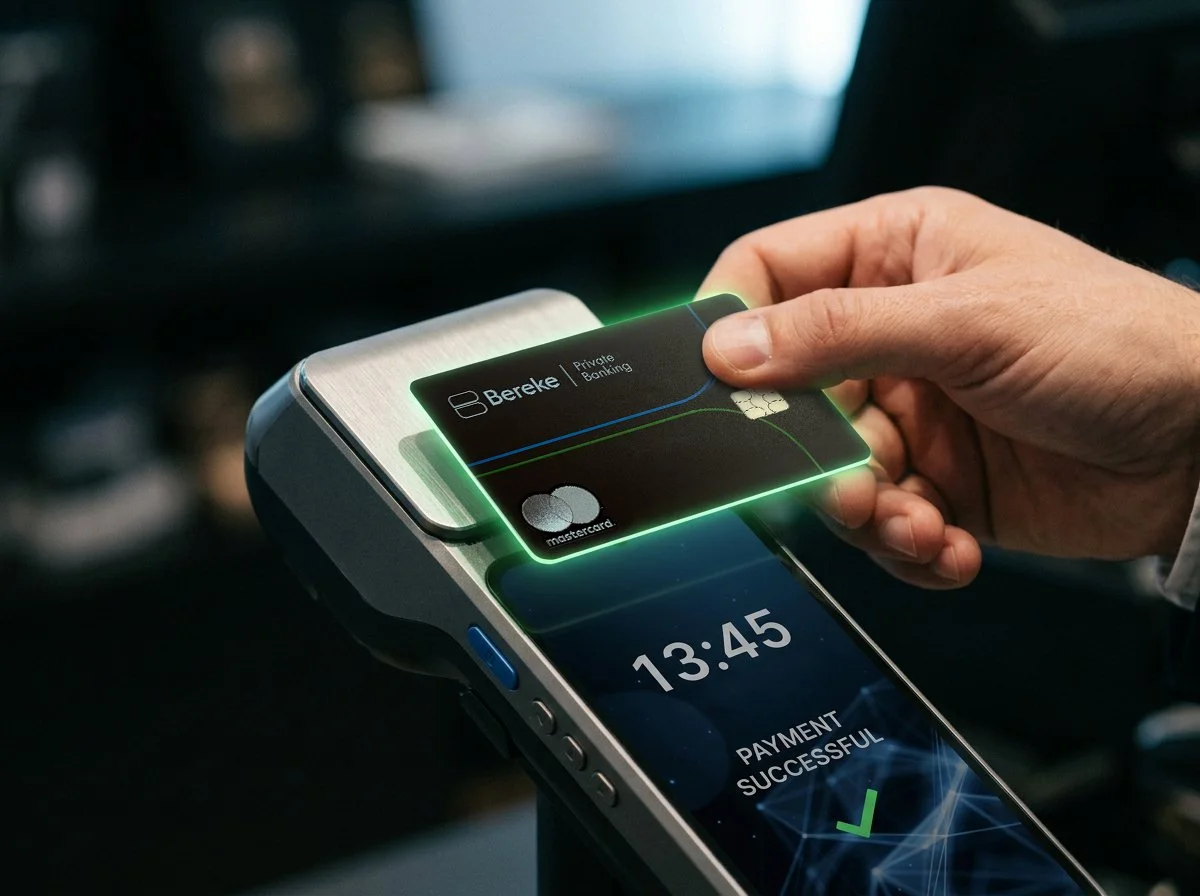
Most of what a payment card does happens quietly.
You reach for it, you tap it, you put it away. The whole exchange takes a couple of seconds, and in most cases, nobody notices it happening at all. That is by design. Payments are meant to be fast, forgettable, invisible.
But invisible is not the same as meaningless.
Think about how many small, ordinary actions carry a little signal that something worked. A phone that lights up the moment it starts charging. A dashboard that glows to life when the engine turns over. A doorbell that flashes before it rings. None of these moments are dramatic. They are just small confirmations, built into everyday objects, that something has happened.
The LED Payment Card works on that same idea.
There is no battery inside it, and nothing to charge. The light comes from the same field that powers the contactless payment itself, drawn from the terminal at the moment of the tap. The card sits still in a wallet or a pocket like any other card, until the instant it is used. Then, briefly, it lights up.
It is a small thing. But small things are often the ones people remember.
A moment that stands out without trying to
Picture a busy morning at a coffee counter, or a crowded bar late at night, or a checkout line where everyone is a little distracted. A tap and a beep are easy to miss in all of that noise. A flash of light is not.
That is not about spectacle. It is about giving a routine action a bit more presence, in places where routine actions tend to blend into everything else.
A detail that quietly helps, too
There is another side to this that is easy to overlook.
For someone who is hard of hearing, a beep confirming a payment does not always register, especially somewhere loud. A light does. For someone older, or anyone who has ever squinted at a small screen wondering if a payment actually went through, a visible glow answers that question without any guesswork. It does not ask for more attention than usual. It simply gives an answer that is easier to catch than a sound or a number on a tiny display.
None of this was the flashy part of the idea. It is the practical part, and it matters just as much.
Not a gimmick, a small shift in experience
An LED card does not change what a payment does. Money still moves the same way, through the same networks, with the same security behind it. What changes is how the moment feels, and who is able to notice it clearly.
That is really what this comes down to. Payments are full of small, repeated moments that most people stop noticing after the first few hundred times. A little light does not rewrite that experience. It just adds one more layer to it, and makes it a little more likely that this particular tap, this particular moment, gets noticed rather than forgotten.
For banks and card issuers, this is a way to give something ordinary a bit more shape, without asking customers to change a single habit. For everyone holding one, it is a card that quietly does more than confirm a purchase. It marks the moment.