
Why Your Payment Card Should Reflect the Life You're Already Living
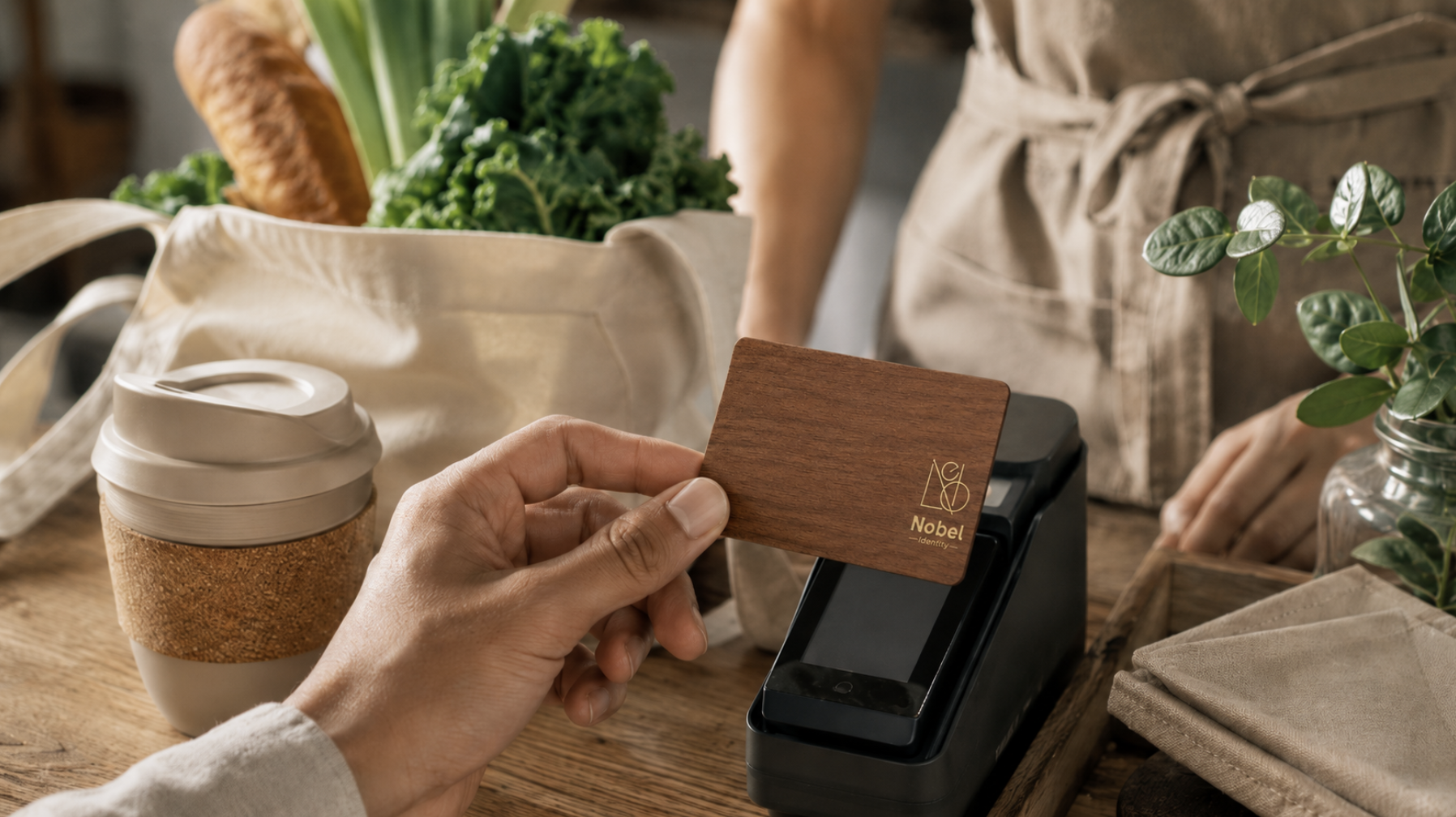
Most people who care about sustainability have already made a series of quiet, deliberate choices. They bring a reusable cup to the coffee shop. They choose the organic option when it is available. They fly less, buy less, and think more carefully about what they bring into their lives and what they leave behind. These are not grand gestures. They are everyday decisions that, taken together, say something meaningful about who a person is and what they value.
And yet, tucked into that same person's wallet, there is almost always a payment card made of plastic.
It is one of the last touchpoints in modern life that has not caught up with the shift in values happening all around it. The payment card is handled dozens of times a week. It moves through coffee shops, farmers' markets, boutiques, and airport terminals. It sits in a wallet alongside everything else that person has carefully chosen. And for the vast majority of people, it has never been designed with those values in mind at all.
At Nobel Identity, we think that should change.
Wood payment cards are exactly what the name suggests. Cards crafted from real, sustainably sourced wood, designed to meet the same technical standards as any premium payment card while carrying a fundamentally different footprint. They are durable, functional, and secure. They work seamlessly with modern payment infrastructure. And they feel completely different in the hand, warm, natural, and considered in a way that conventional cards simply are not.
The case for wood as a material is not just about aesthetics. Traditional plastic payment cards are produced in enormous volumes and replaced frequently, creating significant waste over time. Wood offers an alternative that is renewable, biodegradable, and sourced from materials that do not carry the same environmental burden. Choosing a wood card is not a statement made once and forgotten. It is a decision that reflects itself every time the card is used.
There is also something to be said about identity. Research consistently shows that people view their payment card as an extension of who they are. A premium card communicates status and care. A sustainable card communicates values. A wood card from Nobel Identity communicates both, without asking the cardholder to compromise on either.
For banks and financial institutions, this matters in a practical sense. Consumer expectations around sustainability are not abstract. They are shaping purchasing decisions, brand loyalty, and the relationships people choose to maintain with their financial providers. Offering a wood card is not simply a product decision. It is a signal that an institution understands where its customers are heading and is ready to meet them there.
At Nobel, sustainability is not an add-on to what we do. It is embedded in how we design, how we manufacture, and how we think about the future of payment cards. Our wood cards are part of a broader commitment that includes recycled materials, efficient production processes, and cards engineered for longevity rather than frequent replacement. Every element is considered, because we believe the best products are the ones that are built with intention from the very beginning.
Sustainability is a lifestyle. It shows up in the choices people make every morning, every time they shop, every time they move through the world. The payment card should not be the exception.
It should be part of the story.