
The Weight That Speaks: Why Metal Cards Have Become the New Way to Show Class
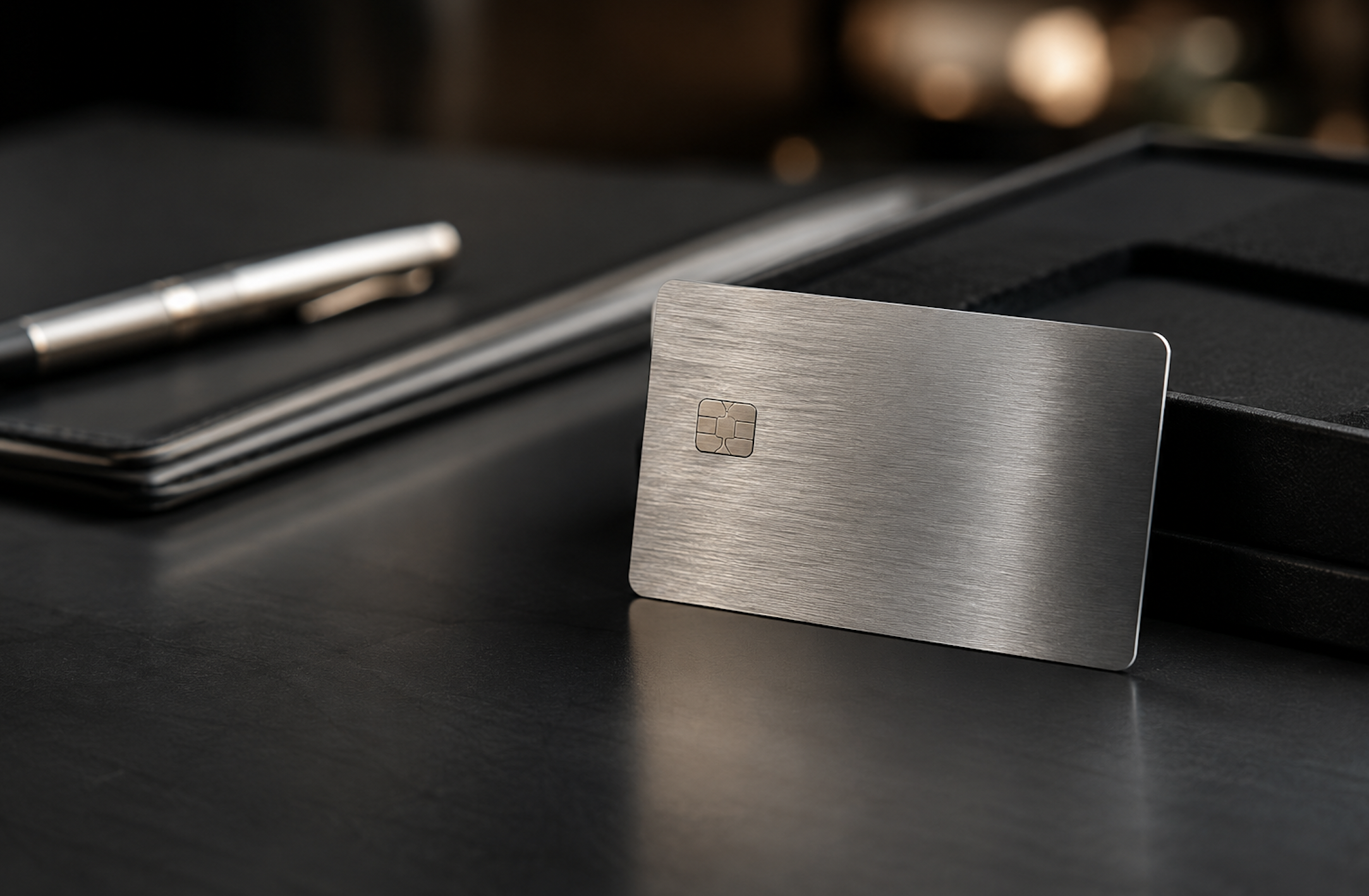
There's something about the weight in your hand. A metal card feels different before it's even used. It sits heavier in the wallet, it lands with a different sound when placed on a table, and it carries a sense of permanence that plastic never quite manages to imitate. In a time when most of our finances have become digital and invisible, the physical card has become one of the last places a company can actually put its brand directly into a customer's hand. That's why metal cards have become so much more than a payment method. They've become a way of showing who you are.
A status symbol that doesn't need explaining
What makes the metal card special is how directly it communicates. You don't need to explain why a metal card feels exclusive, you simply feel it. The weight, the cool surface, the way the card catches light differently than plastic, all of it creates a sense of quality that's hard to put into words but impossible to miss. For customers who already connect their financial choices to their identity and lifestyle, the card becomes an extension of themselves rather than just a tool they happen to carry.
This is also why metal cards have become so closely tied to premium customer segments. Banks and fintechs looking to reach affluent or loyal customers often use the metal card as a signal, a way of saying this customer belongs to something beyond the ordinary, without having to say it out loud. The card does the work on its own.
The brand in someone's hand
For a company, a metal card is a rare opportunity. Most brand interactions today happen through a screen, an app, or a notification that disappears as quickly as it arrived. A metal card is different. It's physical, it gets held, it gets used every day, and every time it's pulled out at checkout or placed next to someone else's card on a table, it communicates something about the company behind it. A logo engraved in metal carries more weight, both literally and emotionally, than the same logo printed on plastic.
It isn't just about looking expensive. It's about consistency. A company that invests in this kind of detail signals that it cares about the whole experience, not just the product but everything that surrounds it. For customers who already trust a brand, the card becomes confirmation of that trust. For new customers, it's often the first tangible proof that the company means what it says.
Where sustainability meets craftsmanship
Metal cards don't have to stand in opposition to responsible thinking. With the right materials and manufacturing process, a metal card can last significantly longer than its plastic counterpart, which in practice reduces the need for replacement cards over time. It's a clear example of how a premium feel and sustainability can work together rather than compete with one another.
A small detail that says a lot
In the end, the metal card is about the same thing all good design is about, making something everyday feel a little more significant. It isn't the card itself that creates class, it's the feeling it gives every time it's used. A company that understands this also understands that the small physical details still matter, even in a digital world.
That's exactly the feeling NOBEL builds its cards around. Not just a payment method, but a physical proof of what a brand stands for.